Amazon Product Photographer | Kate Benson | How much does Amazon Photography Cost?

If you can tap into the large customer pool Amazon has, your business could become hugely successful. Because there are so many sellers, though, the competition is high. A key role in setting yourself apart from the rest and attracting customers is your Amazon listing product photography. Many e-commerce shoppers are influenced by product photos. When shopping online, customers cannot physically see or touch your products, so your images speak volumes. One thing I love about Amazon is how fast clients can see a return on investment with their product photography. But that can be daunting to figure out how to do successfully and it comes with a lot of questions. This article hopefully will clear up those questions by talking about how much does Amazon photography cost, what the workflow of working with a professional Amazon photographer is like, and what the benefits of that are.

One thing I love about Amazon is how fast clients can see a return on investment with their product photography.

Amazon has strict guidelines for photography. Different products have different requirements that Amazon spells out in their style guides (scroll down to Resources for some of these). A product photographer will be able to go through the guides and make sure your images meet all the requirements. The last thing you want is to invest time and money into getting your product photography on Amazon and have the website reject your images because they don’t meet the strict requirements.

What is it like to work with a product photographer for my Amazon listing?

Different professional product photographers have different workflows, so I can only really speak to how I work. My goal is to make sure the files delivered match the art direction and are on brand while still meeting Amazon’s guidelines. The photography process varies from client to client, because companies of all sizes sell on Amazon and so the needs and team change accordingly. So whether it’s the photographer, the client or a team doing it, bellow are some of the steps that happen.
  1. Art Direction/Mood Boards: I’ve worked with clients who have professional art directors who send me documents of each shot of the product and the corresponding image examples of what I need to match or exceed. However, I also work with clients who have no idea what art direction is and I help them form that document. The art direction has to be within Amazon’s image requirements which means we don’t have as much flexibility with the primary product shot in terms of background, but the styling, lighting, and propping are all flexible and the art direction tells me the client wants. Another term for art direction is mood board so whatever you call it, it the same thing. By being creative you can draw attention to your product in a sea of similar products. Shooting a glass bottle empty for example wouldn’t draw much attention by itself on a page full of similar empty glass bottles, but filled with bright fruit, herbs or liquid the image stands out from the rest. That is how art direction can help.
  2. Shoot Day: The product usually is shipped to me in my South Carolina studio space where I work remotely with clients all the time. When the client can’t be on set for the shoot day, I make sure the client has access to a computer or phone and when I think I have the shot, I send a preview image for the client to review and approve. That way, clients are still able to participate in the photoshoot and adjust the art direction as their products are shot if they want to. It gives clients confidence that they aren’t purchasing images that won’t work. I don’t want clients to feel like they have to blindly trust me so I offer to make the shoots as interactive as possible regardless of where the companies are based out of.
  3. File Delivery: This can vary. Just because we are shooting for Amazon doesn’t mean every client is going to only use the images I take on Amazon so often clients expect a larger file than Amazon would like so they can have in on hand for other purposes. My default is to give a larger file to the clients and let them make it smaller for Amazon but when a client tells me they want it just Amazon size or two versions (large and small for Amazon) I give it to them that way. Clients can get the files the same day I shoot or up to a week after. It depends on how many shots we are taking and how much retouching is needed. For example, if I’m shooting 100+ items, odds are that most of the day is going to be dedicated to the photographing of the products. But if I’m shooting 1 product I’ll usually have time that same day to do any retouching that is needed and send it over right away.
When I work remotely with clients, they ship their products to my South Carolina studio and include a return label. I can then easily send the products back to them once the shoot is complete.

How much does Amazon photography cost?

Amazon photography cost = Photographer and team time + Expenses

In the field of photography, your rate is equal to how much time it will take to shoot your product, plus any other expenses (like props, a stylist, or models). The most basic Amazon photo (one object on a pure white background) will cost significantly less than an image with people in an environment with your product because we have to make sure that everything in that space looks right (the people, the space, the props in that space, etc). So Amazon photography cost is very dependent on the art direction. Amazon photography cost less than $200 to over $600 depending on how you want it to look. The low end of that Amazon photography cost estimate is the product on a white background by itself (e-commerce image) and the higher end of Amazon photography cost includes props, people, locations, etc. Remember to look at your competition and think about how big do you want your business to go? If you want to be the #1 seller of your product, you need to see what the current #1 seller’s photos look like, check out their descriptions, read their reviews, and then do even better on your listing! By hiring a professional product photographer for Amazon, you can get your images to a competitively high standard while following Amazon’s requirements.

 Amazon photography could cost less than $200 to over $600

If you have the budget, you should consider getting images with your product in an environment or on model if applicable. These lifestyle shots are more sensory, and can help your customers better understand how to use your product, and what it looks/feels like. Lifestyle images often need to budget for props and talent (I will always use whatever I have on hand to keep costs down if it works for the shoot though). In the example below, I used fresh fruits and veggies for styled images as well as a model using the product on location. We also did some plain white background shots of just the product. This shoot was over $600 because it involved so many components. However, the product shot up to the #1 spot after the Amazon listing was updated.

You can also add lifestyle images to the product description. These photos could help break up larger sections of text, and can enhance your listing through even more additional views and details. Having these types of secondary pictures in the product description is another way to stand apart in the competitive market on Amazon. 

How can I minimize my Amazon photography cost when I have a small budget?

It might sound counterintuitive, but the best way to minimize your Amazon photography cost is to tell your product photographer what you’re looking for and what your budget is. For reference, I don’t just take a picture, I care about the why and the what behind each shoot. I want my clients to get images to help their businesses grow, and if I succeed, they’ll come back needing more. If I know your budget ahead of time, I can consult with you to see how we can achieve the images you’re looking for based on that limit.

When the budgets are really tight, it can be worth it to start small and work your way up. Getting a few images that look amazing on your listing will help more than a bunch of images that are just okay. Unflattering pictures of your product can hurt your sales by turning a customer away so I recommend taking the less is more approach in those cases.

Lower the Amazon photography cost by telling your product photographer what you’re looking for and what your budget is.

A large part of the Amazon photography cost is the studio lighting setup and breakdown, as that is a time consuming process. I try and help everyone who reaches out to me. When someone reaches out and the budget is really tight, but they can wait a bit for the images I’ll wait and shoot the project until the next time I have an Amazon client. This move splits the setup and breakdown costs between two clients and saves them both money.

What are some general Amazon image requirements?

According to Amazon’s Product image requirements page (you need to log in to your Amazon account to view it):

  • Primary product images must be on a pure white background
  • Images should be between 1,000 and 10,000 pixels on the longest side
  • Preferred image file format is .JPEG
  • Products should occupy 85% of the frame on limiting dimension of longest side
  • Images must not be blurry, pixelated, or have jagged edges


Final Thoughts

Selling on Amazon is a great way to increase your e-commerce revenues. Working with so many different brands and clients for over a decade on Amazon photography has given me a chance to learn about what works and what doesn’t. Clients that hired me attended Amazon selling seminars, beta test their images, etc. and have talked to me about what works, what didn’t, and why. This has put me in a unique position to know a lot about how to optimize images for the best return on investment through Amazon. I hope some of this article has been helpful for you whatever size company you have!

If you need an Amazon photographer and would like more information, or a free quote on your project, feel free to contact me through Kate Benson Photography.

Good luck with your Amazon business!

Connect with Kate:

14 + 8 =

Product Photographer | Kate Benson | How to send clients files, and how not to.

Okay, August is flying by, as did every other month this year. Much overdue is a quick recap about what’s been going on with me, my biz, my family, etc. I have had the craziest two years. That broken ankle? Well, that was 3 surgeries and over a year of physical therapy. Then one more surgery this spring because who really needs a gallbladder anyway? On top of that, life has been sending one whirlwind moment after the other my way. Some are exciting, some are sad (going to really miss Budapest, he was a great dog), but growth is always important. So with caution, I am standing on my own two feet again, surging forward in career and life, but still a bit shell shocked that some minor thing could actually be the next major thing rearing it’s head my way.

Kate Benson Photography has had it’s shares of challenges this year as well. This summer alone brought a new website and (with the help of some really spectacular clients) I was able to discover that the file uploading system I’ve been using, Box.com has a terrible file compression for uploading photographs and in no small way alters the files. Take a look at this little screen shot to see what I mean:

The image on the right is the original, on the left is what it becomes once uploaded to Box.com. Something like this can’t be taken at face value, this could just be a preview file and not the actual file, right? I wish. I went ahead and tested this inside and out. For anyone who is interested, here is a list of troubleshooting I tried because I realllly didn’t want this to be an issue with Box.com. For anyone who isn’t interested, go ahead and skip to the next paragraph.

  • download the file to see if it was just the online preview that was showing differently (it wasn’t).
  • Compress the file into a zip folder and upload and download the file to see if that circumvents the color loss (it didn’t).
  • Tried uploading files to compare to Box.com in case it was a universal problem with the uploading (it wasn’t). I checked Box.com against: Dropbox, Google Drive, WeTransfer, + directly emailing them. Box.com was the only one with this issue
  • Found a “resolved” complaint about this on Box.com’s help section. A different photographer had noticed this too and was asking if they were doing something wrong and how to fix the problem. Box.com eventually marked the issue “resolved” and closed comments without providing any answers. Shady much?

After that, I felt pretty confident admitting the problem was Box.com and there wasn’t a way to work around it. Most of the time, clients weren’t noticing color issues and so they weren’t saying anything to me about it. It’s not uncommon to have color shifts in shooting, hence me getting and using the color light to check products. I mean, we use color cards when shooting for this reason.

I was talking to my assistant Chelsea about this, she was shocked when I told her that I had heard a client was having to change the colors and contrast of the images I sent after I spent so much time matching them. I was surprised too. So this answered a lot of questions.

I dug in deeper after that. I started asking clients who work with multiple photographers how they were getting files. I noticed Box.com was not high on the list. WeTransfer, Drive, and Dropbox were though. Since I’m usually sending large batches of files, Drive made the most sense for me. But it’s been tricky since I can’t leave the files on there indefinitely. I have to take down the files as even with upgraded storage, my files are so large it and so numerous they just eat through the space.

Which leaves me officially open to suggestions. How do you all send files? What do you use and any tips as to why are greatly appreciated!

It’s pretty amazing that over a decade into running a business I can still have so much to learn. Which I’m totally okay with, by the way. If I stop learning it’s probably because I’m getting lazy and I can expect my business to stop growing. So stay tuned. I’ll be going back over that whole new website thing soon, because it actually was two new websites in less then a year.

Lifestyle Photographer | Carolina | Kate Benson

Lifestyle Photographer | Carolina | Kate Benson

Lifestyle photographer Kate Benson for Boca Terry

The Rebranding.

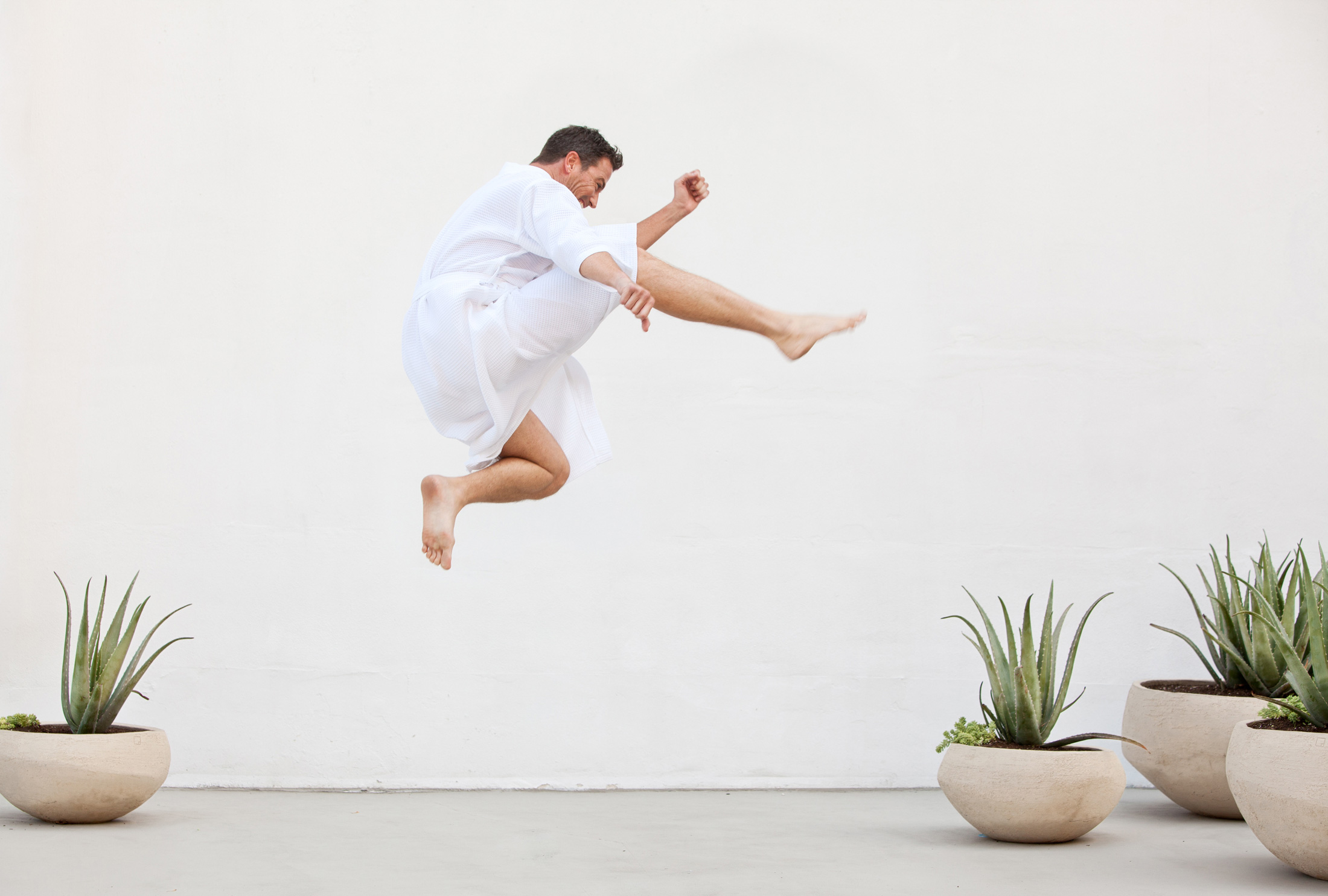
If you look at my website, you may not see much that shouts “TRADITIONAL LIFESTYLE PHOTOGRAPHER” on it. I don’t shoot lifestyle the way many photographers do. When I get the opportunity to work with clients in this genre, I like to play and create situations that the models can be characters/actors in and then approach my shooting from a documentary style. The camera should feel like a friend or be invisible in the context of the pictures. The luxury bathrobe company Boca Terry connected with me through a branding agency a while back and asked for me to help photograph a rebranding for them. I was invited to sit in for more than a couple meetings and really learn what BT loved and didn’t love about their photography in the past. Getting this time with the client meant that when we arrived at the beautiful 1 Hotel South Beach for the shoot, capturing Jason and Fernanda went really smoothly. I loved working with BT. The company has great leadership and team so it never felt like work and the days flew by. I was hired to be a model + lifestyle photographer and still life/product photographer so across the board their images could have a consistent feel. Being able to shoot both on model and still life really served me well as the photographer on this project as I really love both types of shooting and don’t treat one as a requirement for getting the job. In this case, the resort focused product photographer roll was just as important as the lifestyle photographer one. Here are some of my favorites from this shoot:

In addition to the needed image, I always try and give my clients some surprises. Jason practicing his martial arts was the team favorite of these from the shoot. 1 Hotel was just opened at the time we did the shoot and we found an outdoor space that was mostly being used for storage. My assistants helped me moved the planters against this blank wall and cleared out a space for Jason to do his magic. When we get a chance to be really creative and the team is good and relaxed, the most unexpected and engaging photography happens.

Looking for a lifestyle photography quote? Send a message our way!

305.982.7761 [email protected]

Where?

Location

6 + 2 =

How much does a Jewelry Photographer Cost?

If you’re looking for a professional jewelry photographer, this article is for you.

I’m Chelsea Lister, a Charleston area website builder, and the more complicated websites I build are for jewelry clients. There is a lot of work that goes into the images for your website as that is where you are going to either land a sale, or a customer is leaving the page. Jewelry photography takes a lot of time and planning if done right and I wanted to understand how this time gets reflected in the client’s cost. I spoke with professional jewelry photographer Kate Benson for a better idea. There are a variety of images styles you can take for jewelry, but I’m going to focus on e-commerce website images. These images are extremely important, because they are your first impression to your customers. If you don’t catch their attention now, there’s risk of loosing sales. Think of it like real estate photography. You want to go see the home with the beautiful lighting and bright, full-frame images that capture the architecture and space. Not the house with cropped room pictures that are too dark to see in. Jewelry photography is the same. You want it perfectly lit, in focus, and captivating to your customers. But jewelry is one of the hardest products to shoot. You need to make sure it’s done right. Why hire a professional jewelry photographer With all the tools at our disposal, it’s tempting to try to cut costs for photography. You can easily search for DIY tutorials, order your own equipment, or compare quotes between photographers to find the cheapest rate. The difference is that a professional jewelry photographer will make your piece look stunning, and go above and beyond your expectations. You’ve invested in your jewelry, so you should invest in excellent photography that will be true to your products. Having build websites for clients who went both paths, the websites that invested in their product photography out sell (by a lot) those who don’t. If you get quotes from multiple photographers, make sure you compare apples to apples. If it seems too good to be true, it probably is. “Know what you’re paying for. I always include overhead,” said Kate. She also adds other anticipated costs in her quotes, but not everyone includes extra fees. One way to understand what the quote includes is to ask to see an example of what the jewelry images will look like at that lower cost.  Another reason to hire a professional jewelry photographer is because they want you to be successful. One of the reason’s I like working with Kate is that I often hear her offering suggestions to clients about different ways to photograph a piece, or other angles to consider taking. Professionals photographers have also seen what sells and what doesn’t. It might make costs a little higher, but having a photographer who is also a consultant can be huge. They’ll be able to guide you because they’ve done this many times before.  A big consideration to hiring a professional, but not the most obvious, is repetition. If you continue to work with the same photographer, your images will stay consistent from shoot to shoot. For example, Kate showed me some of her studio notes. For each client she records all the values for the lighting, studio setup, and camera, notes about the post processing, and pictures of the studio. These details allow her images to look the same whether they were shot back to back, or 6 months apart. And with the complicated setup for jewelry, these notes are critical. By paying more for a professional jewelry photographer, you know you’re working with someone who knows that they’re doing. They are careful and precise in their work. The cost of hiring a professional jewelry photographer The cost of jewelry photography varies widely, and can run anywhere from $10 to $2,500+ per image (especially when you factor in shots on models which include a lot of other team to product), which is a pretty big range. There are many contributing factors for your per image cost. Kate focuses on four main variables.
  1. Quantity of images
  2. Art Direction
  3. Availability 
  4. Quality of the Jewelry
In general, photographers essentially charge based on time + costs + usage (which is minimal for website photography). The more shots you want, the more time the photographer needs to shoot, so the larger the overall estimate. Make sure your estimate includes overhead fees like the time it takes for the lighting setups. To get a good base for comparison, take the quote you get after adding all of these items together and dividing it by the number of products you want shot to get a cost per shot. The more jewelry pieces you have and shots you need the higher the estimate total but the lower the per image cost will be. One way Kate minimizes costs is to be efficient. She organizes the jewelry, and shoots everything that requires the same setup, trying not to move the lights until she has to (as changing the setups increases the overall time spent shooting and raises the costs). She gave me a great example of how important quantity can be toward your end jewelry photography costs. One of her clients gave her a few jewelry pieces to shoot, and Kate sent them under 15 files, at a per image rate just below $60 each. For a later shoot, that same client Kate sent over 150 files, and the per image rate was under $30 each. It’s best to send large quantities of your jewelry over to a professional photographer at a time, to minimize your costs throughout the year. According to Kate, the largest deciding factor in cost is art direction. This variable dictates exactly what the photographer needs to do. What you want your jewelry to look like will depend on many costly options. For example,
  • Do you want your product on a plain background, or on model?
    • Models can significantly increase your costs. Not only do you need to pay for the model, but also depending on the shot you’re looking for, you might need a hair and makeup artist, and/or a stylist, and possibly a location.
  • Do you want reflections under the jewelry, shadows, or neither?
  • How many shots are you looking for?
    • Each angle of a piece of jewelry is one shot
    • Multiple pieces of jewelry in one shot would still be one shot but the cost for that shot could be higher since it has more time to style and more pieces to retouch.
    • Details/closeups of jewelry are also one shot
  • Do you want to use any props?
    • Depending on the props, this might be an insignificant charge, or huge
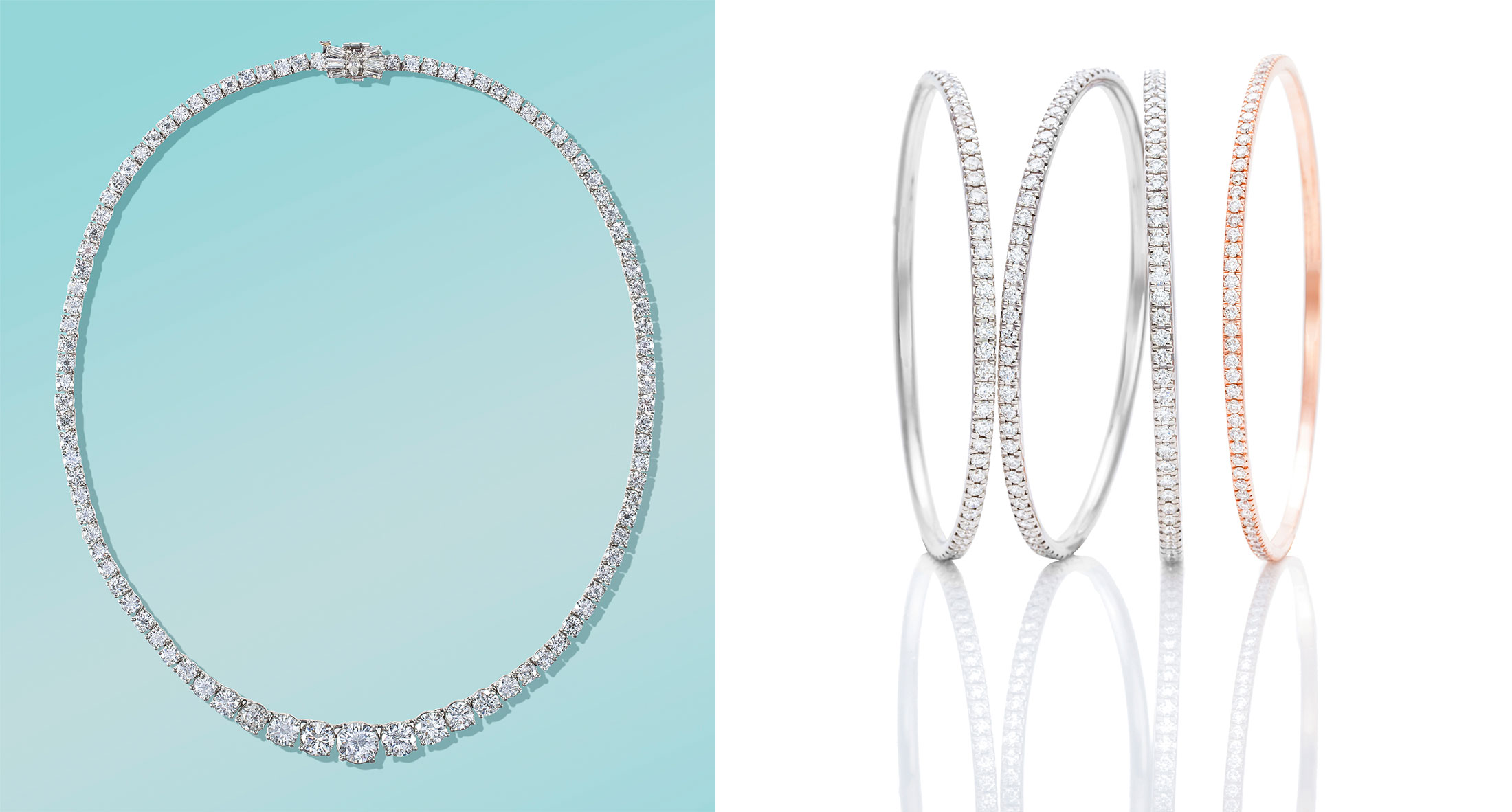
As you can see, there are many cost factors that a photographer can determine from receiving art direction from you. An example of good art direction is this image: The availability of everyone involved will also determine your image cost. Sometimes, you needed your jewelry images yesterday and want to get them rushed. In most cases, there’s a large rush fee. When I found out about how Kate accommodates a rush job request, I thought it was really well-put. I wish I had thought of it. Instead of you paying a “rush fee” and pushing another client’s work to the side, you pay for Kate to either work overtime, or get an extra set of hands to help finish the projects before you. That way, all of her clients still get the images they need on time, but you got yours faster than typical. I know, because I’ve occasionally asked for her to rush shoots for my clients.  The last major cost factor Kate mentioned is the quality of the jewelry. When a professional jewelry photographer is trying to make a piece look as good as possible, there might be additional production necessary. Extra retouching could be needed if the jewelry being shot are samples that show signs of handling. Those pieces might need additional retouching to make sure any flaws that are not representative of the actual product are not present. Fine jewelry might need extra time in setting up the shooting space if the product has insurance requirements that restrict where it can be shot. Overall, if you have a very simple setup, where the lighting doesn’t need to change, and the products are all shot at the same angle, your setup costs will be broken down into your per image shot. And that will be much cheaper.  How you can minimize your costs You want to hire a professional jewelry photographer, but it’s still a little too expensive. Is there anything else you can do to minimize the costs? Yes, because remember: time and cost go hand in hand with photographers. The quicker they can shoot your jewelry, the less it will cost. First, treat your jewelry as if you are getting ready to hand them to a customer. Make sure to polish them before giving them to the photographer. If they’re used, such as antiques or auction pieces, it’s best to get them professionally polished. Having the pieces ready for the shoot means the photographer doesn’t have to spend much time polishing and cleaning the jewelry when it arrives, they can quickly move from piece to piece during shooting, and it minimizes the time it takes to retouch the pieces in post production. And the less time the photographer needs for your shoot, the less expensive the invoice. Another way you can lower your costs is by recoloring. If you have the exact same jewelry piece (including chains, if applicable) in gold, rose gold, and silver, or if you have the same piece with different fine stones, a professional photographer like Kate can often recolor the images for you. First, they style one of the pieces and take the image. Next, they take images of the other pieces for a color reference (no styling necessary). Then, after retouching the styled jewelry, the photographer can go and recolor it using the references from the other jewelry images. This process saves time because the color references are not styled, and the photographer only needs to Photoshop (retouch) one file (the styled jewelry piece). For example, Kate recolored some fine stones for a client, and the cost per image was under $3 each file.  If you’re in love with a jewelry photographer’s work, but don’t need to have them on location, you might be able to mail them your pieces. This will save you the photographer’s travel expenses. When Kate handles jewelry that was shipped to her, she offers to do test shoots to make sure the images are what the client wants, or live previews where the client can receive the images in realtime and make any necessary corrections to the art direction. She might also offer the option to hire her for an hourly rate. So, if you’re looking to work with a jewelry e-commerce photographer, shipping might be the best way to save some money. The price difference between everyday and fine jewelry Being able to ship your jewelry is dependent on what you carry. If you sell everyday jewelry, your overhead costs will probably be lower, and you can ship your jewelry to the photographer to save travel expenses. However, if you sell fine jewelry, there are strict insurance regulations. Jewelry is a unique product in this regulation, so your photographer will have to come to you. When I asked Kate how she handles fine jewelry, she said she travels all over the country to shoot for clients. One of her favorite shoots was in a vault, where she had to go through extensive security before being able to see the piece she was photographing and bring in battery packs for all her lighting. Final thoughts Hiring a professional jewelry photographer for your e-commerce website will help you in the long run. You are hiring a photographer who not only knows how to make your jewelry look stunning, but also acts as a consultant who knows what works and what doesn’t, and who can give suggestions to enhance your brand. It is worth the cost, but there are certainly some ways to help lower your per image rate.  If you are looking for a professional jewelry photographer and would like more information, or a free quote on your project, contact Kate Benson Photography. Good luck with your e-commerce website! Chelsea

Connect with Kate:

2 + 13 =

Subscribe To Our Newsletter

Join our mailing list to receive the latest news and updates from our team.

You have Successfully Subscribed!